Loading image...

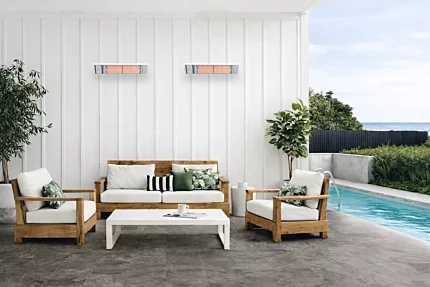
Radiant heat technology transfers electromagnetic energy directly to solid objects and people rather than heating the air around them. Unlike forced-air systems that warm the air only to watch it rise and escape, radiant heating delivers warmth through infrared radiation, much like how the sun warms your skin on a cool day. This fundamental difference in energy transfer makes radiant heating exceptionally efficient, responsive, and comfortable, particularly in outdoor environments where traditional convective heating fails.
The choice between heating technologies shapes not just comfort and energy costs, but how spaces function. Whether you're planning a restaurant terrace, designing a residential patio, or creating a commercial gathering space, understanding how radiant heat works reveals why outdoor radiant heating has become the preferred solution for architects, designers, and hospitality professionals globally.
Loading image...
Radiant heat transfers energy through electromagnetic waves in the infrared spectrum, wavelengths invisible to the human eye but intensely felt by skin and solid surfaces. When radiant heat reaches an object or person, the infrared energy converts directly into warmth. No air movement required. No circulation needed. No waiting for warm air to find its way to you.
This differs fundamentally from convective heating, where a furnace warms air, that air rises and distributes across a space, and you feel the warmth only where that moving air reaches. Outdoors, this approach collapses: warm air simply rises and dissipates, wasting energy. Radiant heating bypasses this inefficiency entirely.
The history of radiant heating stretches back further than most realise. Roman architects engineered hypocaust systems, underground channels that radiated heat through walls and floors. Centuries later, Frank Lloyd Wright integrated radiant floor heating into his residential designs, recognising that warmth rising from below creates psychological comfort beyond what thermometer readings suggest. These historical examples shared a principle: direct heat transfer to surfaces and people, not to air.
The electromagnetic spectrum situates infrared alongside visible light and radio waves. Infrared spans wavelengths from roughly 780 nanometres to 1 millimetre, subdivided into three regions: near-wave (IR-A, 780-1,400 nm), mid-wave (IR-B, 1,400-3,000 nm), and far-wave (IR-C, 3,000 nm-1 mm). Each region carries distinct thermal and safety characteristics. This wavelength classification is essential to understanding why outdoor radiant heating requires a fundamentally different technology discussion than indoor floor-ceiling systems, which rely on lower-intensity, far-wave radiation.
Mid-wave infrared (the 1,400-3,000 nanometre band) represents an optimal balance for comfort heating. Dr. Gerard McGranaghan's peer-reviewed analysis at Ceramicx demonstrates that mid-wave infrared penetrates the first layers of human skin directly, creating natural warmth without the tissue-depth risks associated with near-wave infrared or the uncomfortable surface-only heating characteristic of far-wave systems. Mid-wave delivers what Dr. McGranaghan terms "comfort radiation", energy absorption that mimics the physiological response to sunlight without the associated skin risks.
This thermal behaviour emerges from the physics of infrared emission. Traditional outdoor heaters and industrial infrared systems operate at dramatically lower filament temperatures, emitting predominantly far-wave radiation. Heatscope's engineering choice differs. All Heatscope models employ dual carbon spiral heating elements, filaments engineered to reach 1,100-1,300 degrees C during operation. At these temperatures, carbon spirals emit a spectral distribution centred firmly in the mid-wave band.
The colour temperature of carbon spiral elements is 1,550-1,650 K, producing the characteristic warm orange glow associated with premium radiant heaters. This glow is an incidental byproduct of the infrared emission, not the primary output, a distinction that becomes relevant when discussing design aesthetics later.
Radiant heat travels in straight lines and is unaffected by wind, drafts, or air movement. A breeze that would disperse warm air in a convective system passes right through radiant warmth. This property explains why Heatscope heaters maintain comfort in outdoor environments where wind speeds would render forced-air systems ineffective.
The efficiency narrative around radiant heating stems from direct energy conversion. Electrical input flows through the carbon spirals, which heat up, emit infrared radiation, and transfer that energy directly to solid objects and people. Approximately 90-94% of the electrical power input converts to usable radiant heat, an efficiency figure that exceeds most competing heating technologies. Compare this to typical HVAC systems, which operate at 60-80% efficiency when accounting for ductwork losses, infiltration, and the energy required to condition air rather than transfer heat directly.
The fundamental problem with convective heating outdoors is thermodynamic: warm air rises. In an enclosed space, rising air can be captured and recirculated. Outdoors, it simply escapes. A forced-air heater warming the air to 40 degrees C generates no value once that warm air rises above 2 metres and disperses. Heatscope's radiant approach eliminates this entire category of waste.
Radiant heaters reach full warmth almost instantly. The Spot 1600W heater and Spot 2800W achieve maximum heat output in approximately 15 seconds; the filament temperature stabilises that quickly. The Vision 3200W, operating at higher power, requires 30-60 seconds to reach full warmth. This immediate response contrasts sharply with convective systems, where warm air must first be generated, then must circulate to reach you. The value of instant warmth in hospitality settings where guests arrive expecting comfort is tangible: radiant systems deliver it in 15 seconds, reducing the waiting period and elevating perceived quality from arrival.
Radiant heating creates localised comfort zones. A single heater warms people and objects directly beneath and within its radiation pattern, without wasting energy heating the surrounding air. This zoning efficiency means smaller spaces can use lower-output models (like the Spot 1600W for intimate patios), whilst larger commercial areas employ multiple units or higher-output models (the Vision 3200W for expansive courtyards) rather than oversizing a single system. Energy use tracks directly to actual heating need.
Outdoor radiant heaters introduce no air circulation, no drafts, no particulates. For people with sensitivities to air movement or dust (common complaints in hospitality settings), radiant heating transforms the experience. There is no blow of heat, no sense of forced air. The warmth simply arrives, as gentle and familiar as sunlight.
Loading image...


Heatscope's efficiency advantage spans the entire product range. The Spot 1600W and Spot 2800W deliver heat conversion rates of >=94%. The Pure+ 3000W achieves >=90% efficiency. The Vision 3200W and Next 3000W reach >=87% and >=90% respectively. These figures represent a quantum leap above the 40% minimum threshold established by the IEC 60675-3 radiation efficiency standard (see References).
Why does radiant efficiency matter? Because efficiency directly translates to lower operating costs, reduced energy consumption, and smaller environmental footprints. A heater operating at 90% efficiency uses 10% less electricity than one operating at 80%, compounding annually into significant savings. For commercial operators running heaters during service hours year-round, the difference between a 60% and 90% efficient system represents the margin between a profitable outdoor program and a cost liability.
Thermal comfort at lower air temperatures is a hidden benefit of radiant heating. Because radiant systems warm people and objects rather than air, you feel comfortable at a lower ambient air temperature than you would under a convective system. A patio at 12 degrees C with active radiant heating feels as comfortable as a 16 degrees C space under forced-air conditioning. This apparent temperature elevation (technically called mean radiant temperature in thermal comfort standards) occurs because your skin absorbs the infrared radiation directly.
The sun-like warmth positioning reflects a physical reality. Mid-wave infrared from carbon spiral heaters mimics the solar radiation spectrum more closely than tungsten halogen or far-wave alternatives. Human physiology evolved responding to sunlight, and mid-wave infrared activates the same thermal receptors in skin. The warmth feels natural, familiar, and immediately pleasant in a way that other heating methods cannot replicate.
Heatscope's product line delivers specific heat outputs designed for proportionate spaces. The Spot 1600W provides 1,600W of radiant heat, appropriate for compact patios or intimate outdoor dining for 2-4 people. The Spot 2800W and Pure+ 3000W both deliver in the 2,800-3,000W range, suitable for larger residential entertaining or small restaurant terraces. The Vision 3200W reaches 3,200W, covering expansive outdoor areas. Each model's electrical efficiency and radiant output have been optimised through rigorous testing at Technische Universitaet Dresden to exceed IEC standards.
A telling pattern emerges when surveying the radiant heating market: every major competitor focuses exclusively on indoor floor-heating or ceiling-mounted systems designed for climate-controlled spaces. Energy.gov educational resources discuss radiant floors. Academic literature examines indoor radiant panels. Industry vendors like Radiantec and WarmlyYours specialise entirely in hydronic or electric floor systems. The outdoor radiant heating market remains conspicuously ignored.
This silence reveals a market gap, not a technology barrier. Outdoor heating requires different engineering disciplines than indoor systems. Wall and ceiling mounting (rather than floor mounting) demand robust structural support. Year-round weather exposure (rain, UV radiation, temperature cycling, salt spray in coastal climates) necessitates materials rated for full outdoor service. Aesthetic integration into landscape design requires design sophistication that residential floor heating systems never approach.
Heatscope's engineering addresses these requirements directly. All models carry IP ratings appropriate to outdoor use. The Spot range features IP24 protection, suitable for covered patios and semi-sheltered areas. The Next 3000W achieves IP25, bridging covered and semi-exposed installations. The Vision 3200W delivers IP44 protection for commercial-grade outdoor use. The Pure+ 3000W, Heatscope's premium offering, achieves IP65, fully dust-tight and protected against low-pressure water jets, enabling permanent outdoor installation even in humid or coastal climates.
Materials engineering distinguishes premium outdoor heaters from indoor systems adapted for weather. Heatscope models employ aerospace-grade aluminium bodies, stainless steel fasteners, and fronts protected by SCHOTT NEXTREMA ceramic glass, a material engineered to resist thermal shock, UV degradation, and salt spray exposure. The Pure+ 3000W convex ceramic glass front reduces wind loading whilst maximising light diffusion.
Real-world applications define Heatscope's outdoor positioning. Restaurant terraces and al fresco dining areas create the primary use case: operators want to extend outdoor seating seasons, increase guest comfort, and create memorable experiences. A terrace with inadequate warmth loses revenue and guest satisfaction. Residential patios benefit equally; garden entertaining transforms from seasonal (summer-only) to year-round when outdoor radiant heaters are available. Hotel courtyards, resort pools, covered pergolas, and marquees all represent applications where forced-air conditioning is impractical but radiant heating delivers immediate, localised comfort.
The Spot 1600W suits intimate residential installations where space and heat demand remain modest. For restaurant terraces with 20-30 seated guests, two Spot 2800W heaters spaced appropriately provide balanced warmth distribution. Large commercial courtyards benefit from the Vision 3200W wide heat output and minimal visual footprint. The Pure+ 3000W, with its IP65 rating, weather-sealed ceramic glass, and Red Dot Design Award recognition (2018), is one of the few outdoor heaters rated for full weather exposure whilst delivering design-award-winning aesthetics that enhance rather than dominate visual space.
Loading image...

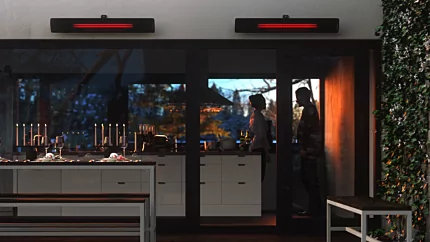
Traditional outdoor heaters compromise aesthetics for function. Halogen and tungsten models emit harsh, intense red or white glows that dominate visual space. They feel industrial, temporary, visually aggressive. Guests see the heater first; warmth arrives as an incidental benefit. This aesthetic liability has long plagued outdoor hospitality spaces.
Heatscope's design philosophy inverts this hierarchy: heat becomes the primary output; light becomes incidental. The company engineers for warmth first, then manages the visual output as a secondary constraint. The result is a 30-40% reduction in light output compared to conventional heaters, a subtle but profound difference in how the heater integrates into designed space.
Light output specifications vary by model. The Spot range produces a subtle orange glow, with light reduction meeting the 30-40% target. The Vision 3200W maintains light output below 300 lumens, roughly the brightness of a single candle rather than a spotlight. The Pure+ 3000W, with its convex ceramic glass front, disperses light across a broader beam whilst keeping output in the 300-600 lumen range. The Next 3000W approaches 600 lumens, still substantially lower than traditional heater glow.
For hospitality operators, this design restraint matters enormously. A restaurant terrace becomes a destination chosen for its ambiance and cuisine, not for a bank of glowing industrial heaters. For residential entertaining, a patio that feels like outdoor living (rather than illuminated by heating equipment) encourages guests to linger. The investment in design-grade materials (aluminium bodies, ceramic glass, minimalist form) signals quality and belonging in premium outdoor spaces.
The Red Dot Design Award (2018), one of the world most rigorous industrial design competitions, recognised the Pure+ 3000W specifically for this design-first approach. The award acknowledges that radiant heating, when executed with design intention, elevates outdoor spaces rather than cluttering them.
Ingress Protection (IP) ratings, defined by the international IEC 60529 standard, quantify an electrical enclosure's resistance to dust and water penetration. The two-digit IP code rates solid-object protection (0-6) and liquid protection (0-9). IP44, for example, denotes protection against objects larger than 1 mm and splashing water from any direction. IP65 denotes full dust-tightness and protection against water jets from any direction.
For outdoor heaters, IP rating becomes a durability specification, not a luxury. A heater installed on a residential patio may face afternoon rain showers, morning dew, and seasonal humidity. A commercial installation on a hotel courtyard endures daily hose-downs, pool splash zones, and year-round weather cycles. An underrated heater corrodes, fails prematurely, and becomes a liability.
Heatscope's IP spectrum aligns design to environment:
IP24 (Spot range, some Vision models): Suitable for covered patios with rain protection, pergolas with overhead coverage, or semi-sheltered areas where direct spray is unlikely. Best for residential installations where seasonal protection (under cover) is assumed.
IP25 (Next 3000W): Enhanced wind and rain resistance. Bridges covered and semi-exposed areas, offering protection slightly better than basic covered installations but less comprehensive than IP44.
IP44 (Vision 3200W): Commercial-grade outdoor use. Handles regular water splashing, rain, and seasonal weather without protection. Suitable for courtyard installations, pool surrounds, and covered dining areas with occasional full exposure.
IP65 (Pure+ 3000W): The gold standard for outdoor electrical equipment. Fully dust-tight and water-jet resistant. Suitable for permanent, unprotected outdoor installation in coastal climates, high-humidity environments, and installations without roof coverage.
Why does this matter for product lifespan? An IP24 heater exposed to regular rain corrodes progressively. Moisture reaches internal components, oxidation begins, electrical integrity degrades. An IP65 heater in the same environment survives because the enclosure excludes moisture entirely. Over 5-10 years, the difference between a weather-sealed and weather-vulnerable heater is the difference between a still-functioning asset and a failed installation.
Environmental context shapes the selection. Coastal climates, where salt spray accelerates corrosion, demand IP65 ratings. Humid subtropical regions with frequent rain favour IP44 or IP65. Dry climates with covered patios can operate adequately with IP24. The choice is pragmatic: select your heater based on real installation environment, not on aspirational specifications.
The Pure+ 3000W IP65 rating represents market leadership for outdoor radiant heaters. Few competitors even rate their products for outdoor service, let alone achieve full weather-sealing. This durability foundation explains the Pure+ 3000W premium positioning and longevity reputation.
Modern outdoor heaters benefit from smart control systems that match heating output to actual demand. All Heatscope models feature two-stage output control: 50% power and 100% power. This dual-stage approach allows operators to modulate warmth, running at 50% during shoulder seasons or lightly occupied periods, and deploying full 100% output during peak service hours. Energy consumption scales directly to need.
Smart integration expands control beyond simple on/off switches. ZigBee ecosystem compatibility enables wireless integration with smart home platforms. The Heatscope ZigBee Bridge, Wireless Switch, and Motion Sensor work across the range, integrating with Amazon Alexa and Google Assistant. Imagine a restaurant scenario: operators programme the terrace heater to activate during evening service hours, step up to full power when a motion sensor detects guests arriving, and step down to 50% during slower periods. The system responds automatically, maximising comfort and minimising wasted energy.
A second integration pathway uses the eWeLink WiFi smart switch, Bluetooth and WiFi capable, managing the 50%/100% dual-stage control via a smartphone app. This approach suits smaller installations (residential patios, boutique restaurants) where wireless simplicity outweighs the full ZigBee ecosystem.
The Spot 1600W includes a 2-step IR remote control, providing basic wireless output management without full smart integration. This option suits installations where simple remote control suffices.
Practical applications demonstrate value. A restaurant can schedule heating for known busy service hours, avoiding the energy waste of heating empty patios. Zone control (placing multiple heaters on separate circuits) enables selective warmth: heat the bar area during happy hour, the dining terrace during dinner service, the lounge during late evening. Motion sensors activate heating when guests arrive, stepping down automatically when areas go unused. The cumulative effect of these intelligent controls, deployed across a season, translates to measurable energy savings and enhanced guest experience.
Heatscope heater installation ranks among the simplest of any fixed heating system. A 2-screw wall or ceiling mount secures the heater to a structure rated to bear its weight. No gas lines. No plumbing. No venting ducts. No electrical panels beyond standard circuit protection. Most installations complete in under an hour with basic hand tools.
Safety distances remain crucial. Installation must observe minimum clearances:
Ceiling mount: Minimum 6.70 inches above the heater (to upper obstacles), 79 inches below (to ground), and 16 inches to vertical surfaces (walls, railings).
Wall mount: Minimum 6 inches to ceiling, 71 inches to horizontal surfaces, and 16 inches to vertical surfaces.
Combustible materials: Never install on wood structures or combustible finishes without appropriate non-combustible backing.
Electrical requirements vary by model. Operating voltage typically ranges 220-240V. A GFCI breaker protects the circuit, mandatory for outdoor electrical installations. Consultation with a licensed electrician ensures compliance with local electrical codes.
Temperature hazards are real. The front screen stabilises around 572 degrees F (300 degrees C), and the protective fin reaches approximately 752 degrees F (400 degrees C). Direct contact causes burns. Adequate spacing (as specified above) prevents accidental contact and guards against nearby combustible surfaces.
Maintenance on Heatscope heaters is virtually non-existent. Unlike gas heaters with burners, pilot lights, and valves, or outdoor furniture with moving parts, radiant heaters contain no moving components, no consumables, and no regular servicing. The entire electrical system is sealed. The heating element is enclosed. Cleaning consists of occasional use of an alcohol-free glass cleaner on the ceramic glass front, applied only after the heater has cooled for 30 minutes post-operation. No annual inspections, no seasonal maintenance, no costly service calls.
The standard warranty covering all Heatscope models is 2 years limited coverage from the date of purchase. This warranty covers manufacturing defects and operational failures. Most installations operate well beyond the warranty period without failure, attesting to engineering quality.
Child safety guidelines apply to all heaters. Young children should never be unsupervised near operating heaters. Supervision requirements vary by age: younger children require closer oversight; older children can be taught appropriate caution. Clear communication about safety (the heater produces heat; direct contact hurts) suffices for most domestic settings. Commercial installations with public access typically employ physical barriers or mounting heights that prevent casual contact.
Loading image...

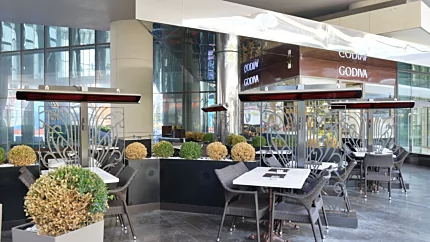
Radiant heat technology finds its strongest applications in spaces where comfort, efficiency, and aesthetics converge.
Hospitality settings drive primary demand. Restaurant terraces and al fresco dining represent the classic use case: extending the outdoor season, enabling year-round revenue, and creating memorable guest experiences. A terrace without heating operates seasonally, generating revenue only during warm months. The same terrace equipped with radiant heaters operates 10-12 months annually. Hotels and resorts employ radiant heating in courtyards, pool surrounds, and covered dining pavilions. The instant warmth and design-integrated aesthetics align perfectly with luxury hospitality expectations.
Residential patios benefit from the same logic on a smaller scale. A family entertaining guests outdoors wants comfort, not a visible heating system dominating visual space. A residential patio with a Spot 1600W or Next 3000W heater transforms from seasonal (summer-only) entertaining to year-round outdoor living. A well-designed radiant heater enhances a patio rather than cluttering it.
Commercial outdoor breakout areas in office complexes create wellness benefits. Employees working outdoors (or in covered areas) benefit from consistent, comfortable warmth. The quick response time of radiant heaters suits transient uses: guests arrive, the space is already warm, they linger. Compare this to convective systems requiring preheating.
Institutional courtyards (university gathering spaces, hospital courtyards, cultural venues) benefit from radiant heating ability to create comfortable outdoor environments without conveying an industrial aesthetic. A university courtyard with radiant heaters feels like a designed public space; the same space with conventional heaters feels utilitarian.
Sizing guidance ensures right-sizing. A compact residential patio (10-15 square metres) suits a Spot 1600W or Next 3000W. For family entertaining with 6-8 people, a single 2,800-3,000W heater provides balanced warmth. Restaurant terraces with 20-30 seated guests typically employ two Spot 2800W units positioned to avoid direct glare in diners eyes, or a single Pure+ 3000W if space permits centralised mounting. Large commercial courtyards (100+ square metres) benefit from the Vision 3200W wide coverage area (approximately 65.4 inches broad) and minimal light output, which suits open-air environments where light pollution should be minimised.
Heating technologies serve different purposes. Understanding the trade-offs clarifies which technology suits a given space.
Radiant heating wins for outdoor applications. The 15-60 second heat-up time has no peer. The efficiency advantage grows more pronounced outdoors, where convective systems waste 50% of their energy heating air that immediately disperses. The installation simplicity and minimal maintenance appeal to operators wanting reliable, low-management heating. The aesthetic integration (particularly with Heatscope design-first approach) suits premium spaces.
Hydronic, gas, and propane systems excel indoors. Enclosed spaces contain warm air, allowing convective and fuel-based systems to operate efficiently. Hydronic systems provide whole-building comfort. Gas and propane deliver high heat output for large commercial spaces. Each technology has its domain.
Heatscope's positioning is unambiguous: premium outdoor radiant heating. The company does not attempt to compete with indoor systems or fuel-based alternatives. Instead, it dominates a specific application: outdoor spaces where comfort, efficiency, and design aesthetics matter equally.
The radiant heating industry continues evolving. Smart integration pathways are deepening. Predictive scheduling (where systems learn occupancy patterns and adjust heating proactively) moves from concept to implementation. Energy management systems now interface with radiant heaters, optimising output across multiple zones and tracking consumption granularly.
Material innovations in ceramic glass and thermal efficiency continue. New electrode configurations promise marginally higher efficiency and better light diffusion. Sustainability remains a focal point: radiant heating powered by renewable electricity (solar, wind) eliminates operational carbon entirely. A building with rooftop solar can now heat outdoor spaces from its own generation, decoupling outdoor comfort from grid electricity.
The hospitality industry is adopting radiant heating at scale. A decade ago, most outdoor heaters were conventional halogen or propane models. Today, premium hospitality venues specify electric radiant systems for the combination of efficiency, control, and design. This market migration continues, driven by energy cost pressures, sustainability requirements, and the simple aesthetic advantage of quieter, lighter-output heaters.
Heatscope's vision aligns with these industry trends: accessible premium outdoor heating, paired with deepening smart integration, powered by efficient electrical infrastructure. The company continues developing form factors that emphasise design integration: heaters that become landscape elements rather than visible equipment. Continued investment in material durability, particularly in coastal and humid environments, expands the addressable market for year-round outdoor living.
The fundamental physics of radiant heating (direct energy transfer without air circulation) means the technology core advantages are immutable. As electricity grids globally decarbonise, radiant heating powered by renewable sources will increasingly represent the most sustainable approach to extending outdoor living seasons. The future of outdoor heating is radiant heating. The question is no longer if, but how quickly industries and homeowners adopt it.
Heating technologies serve different purposes. Understanding the trade-offs clarifies which technology suits a given space.
Radiant heating wins for outdoor applications. The 15-60 second heat-up time has no peer. The efficiency advantage grows more pronounced outdoors, where convective systems waste 50% of their energy heating air that immediately disperses. The installation simplicity and minimal maintenance appeal to operators wanting reliable, low-management heating. The aesthetic integration (particularly with Heatscope design-first approach) suits premium spaces.
Hydronic, gas, and propane systems excel indoors. Enclosed spaces contain warm air, allowing convective and fuel-based systems to operate efficiently. Hydronic systems provide whole-building comfort. Gas and propane deliver high heat output for large commercial spaces. Each technology has its domain.
Heatscope's positioning is unambiguous: premium outdoor radiant heating. The company does not attempt to compete with indoor systems or fuel-based alternatives. Instead, it dominates a specific application: outdoor spaces where comfort, efficiency, and design aesthetics matter equally.
The radiant heating industry continues evolving. Smart integration pathways are deepening. Predictive scheduling (where systems learn occupancy patterns and adjust heating proactively) moves from concept to implementation. Energy management systems now interface with radiant heaters, optimising output across multiple zones and tracking consumption granularly.
Material innovations in ceramic glass and thermal efficiency continue. New electrode configurations promise marginally higher efficiency and better light diffusion. Sustainability remains a focal point: radiant heating powered by renewable electricity (solar, wind) eliminates operational carbon entirely. A building with rooftop solar can now heat outdoor spaces from its own generation, decoupling outdoor comfort from grid electricity.
The hospitality industry is adopting radiant heating at scale. A decade ago, most outdoor heaters were conventional halogen or propane models. Today, premium hospitality venues specify electric radiant systems for the combination of efficiency, control, and design. This market migration continues, driven by energy cost pressures, sustainability requirements, and the simple aesthetic advantage of quieter, lighter-output heaters.
Heatscope's vision aligns with these industry trends: accessible premium outdoor heating, paired with deepening smart integration, powered by efficient electrical infrastructure. The company continues developing form factors that emphasise design integration: heaters that become landscape elements rather than visible equipment. Continued investment in material durability, particularly in coastal and humid environments, expands the addressable market for year-round outdoor living.
The fundamental physics of radiant heating (direct energy transfer without air circulation) means the technology core advantages are immutable. As electricity grids globally decarbonise, radiant heating powered by renewable sources will increasingly represent the most sustainable approach to extending outdoor living seasons. The future of outdoor heating is radiant heating. The question is no longer if, but how quickly industries and homeowners adopt it.
Heating technologies serve different purposes. Understanding the trade-offs clarifies which technology suits a given space.
Radiant heating wins for outdoor applications. The 15-60 second heat-up time has no peer. The efficiency advantage grows more pronounced outdoors, where convective systems waste 50% of their energy heating air that immediately disperses. The installation simplicity and minimal maintenance appeal to operators wanting reliable, low-management heating. The aesthetic integration (particularly with Heatscope design-first approach) suits premium spaces.
Hydronic, gas, and propane systems excel indoors. Enclosed spaces contain warm air, allowing convective and fuel-based systems to operate efficiently. Hydronic systems provide whole-building comfort. Gas and propane deliver high heat output for large commercial spaces. Each technology has its domain.
Heatscope's positioning is unambiguous: premium outdoor radiant heating. The company does not attempt to compete with indoor systems or fuel-based alternatives. Instead, it dominates a specific application: outdoor spaces where comfort, efficiency, and design aesthetics matter equally.